
Native American jewelry is much more than beautiful adornment; it’s a rich blend of tradition, resourcefulness, and creativity passed down across generations. From the subtle shell beads of the California coast to the statement turquoise pieces from the Southwest, every material and method has its own story. I’m sharing some insight into the materials and techniques that bring Native American jewelry to life, including details on tribal practices and methods you might not find in a basic overview.
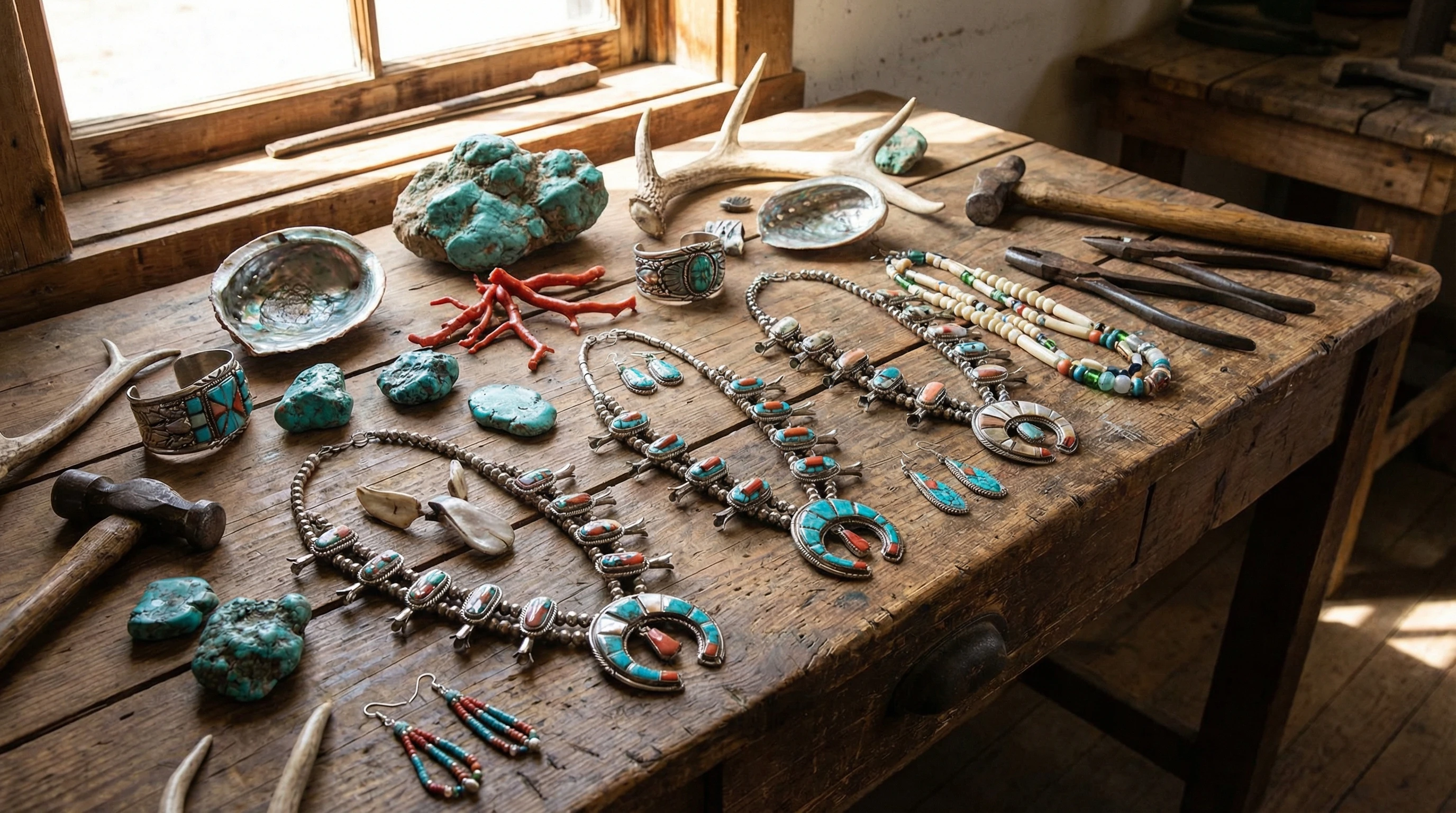
Materials Used in Native American Jewelry
What draws a lot of people to Native American jewelry is the handson approach to using natural and locally found materials. While many people imagine turquoise or silver when they think of Native jewelry, there’s actually an incredible variety depending on region and tribe. Here’s a closer look at what makers reach for, and why.
- Turquoise: Probably the most recognizable stone in Native American jewelry, turquoise plays a big role, especially for the Navajo, Pueblo, and Zuni artisans. Mined in Arizona, Nevada, and New Mexico, it’s loved for both its protective nature and its stunning bluegreen color.
- Silver: The Navajo, Hopi, and Zuni famously use sterling silver in everything from squash blossom necklaces to concho belts. Silver became a goto only after contact with Spanish silversmiths in the 1800s; it’s now a staple.
- Shells and Abalone: Along both coasts, shells like abalone, olivella, and clam are very common. Tribes such as the Chumash and Miwok once used shells, even sometimes as currency, instead of metals.
- Coral: Mediterranean red coral reached the Southwest through trade. Zuni, Navajo, and Pueblo artists use it as striking inlay paired with turquoise and jet, which creates stunning contrast in jewelry.
- Jet and Onyx: The Zuni and Hopi love using jet, a form of fossilized wood, for its rich, dark look. Jet brings contrast and is commonly used for inlays, setting off the other bright stones and shells beautifully.
- Bone and Antler: Great Plains tribes, including Lakota and Cheyenne, use bones and antlers to carve pendants and beads. These materials carry spiritual meaning, as well as practical utility.
- Copper and Brass: Long before silver became common, Northeast tribes like the Algonquin and Ojibwa hammered copper from the Great Lakes into decorative pieces. These metals still hold cultural significance and are sometimes combined with more modern materials in contemporary jewelry.
- Stone and Pipestone: Pipestone (catlinite) is shaped into beads and pendants, especially by Dakota and Ojibwa artists. Other stones, like agate, quartz, and lapis, are also often used according to what’s available locally.
- Glass Beads: Starting in the 1700s, trade beads from Europe became part of jewelry. Plains, Great Lakes, and Woodlands tribes now use glass seed beads for intricate stringing and embroidery. The innovation in beadwork over the centuries reflects adaptability and cultural exchange.
Common Jewelry Making Techniques
Handcrafting Native American jewelry is an art with deep roots and a lot of precision. Each tribe and even each family may use unique techniques, but some approaches have widespread popularity. Here are a few you’ll often see:
- Beadwork: Used by tribes like the Lakota, Ojibwa, and Seminole, beadwork is a way to honor ancestors and pass down designs. Makers string, stitch, or embroider glass, shell, or metal beads onto leather, fabric, or sinew.
- Stone Inlay: The Zuni are masters of inlay, creating mosaiclike patterns by carefully fitting together pieces of turquoise, coral, jet, and shell into silver settings. This process takes steady hands and a good eye for detail.
- Silversmithing: Introduced after the 1800s, silversmithing now shapes much of the Navajo, Hopi, and Zuni jewelry. Sawing, stamping, soldering, and overlay techniques allow for different surface textures and raised designs.
- Stampwork and Engraving: Classic stampwork involves hammering patterns onto metal using handmade stamps. Hopi and Navajo artists use this to add unique motifs to bracelets, rings, and more.
- Overlay: The Hopi are especially known for overlay, where two silver sheets are layered, with patterns cut into the top layer. This gives their jewelry a bold, shadowed effect that sets Hopi jewelry apart from others.
- Heishi Making: The Santo Domingo (Kewa) Pueblo are famous for heishi, the art of handgrinding shell, coral, or stone into tiny, uniform discs for necklaces. Stringing these beads produces a clean, smooth look that is admired far beyond the Southwest.
- Carving: Tribes such as the Kwakwakawakw and Tlingit in the Northwest Coast carve bone, antler, and ivory into amulets and vibrant totems for necklaces and earrings. Sometimes these depict important animals or ancestors, which gives each piece deep cultural meaning.
Jewelry Traditions by Tribe: Unique Materials and Styles
Each tribe has its own signature materials and styles. Here’s a breakdown of a few that stand out:
- Navajo (Diné): Known for chunky turquoise and silver cuff bracelets and bold squash blossom necklaces. Early Navajo jewelry used turquoise and shell, but silver soon became their material of choice after Spanish contact.
- Zuni: Internationally respected for tiny, precisely cut stones, especially in petit point and needlepoint designs. Zuni jewelers skillfully set turquoise, coral, and jet into mosaic inlays and detailed settings that require exceptional patience and talent.
- Hopi: Masters of overlay and symbolism, Hopi silversmiths layer and cut silver into intricate motifs drawn from oral traditions. You’ll notice a lot of cloud, water, and kiva images, making each piece a sort of storytelling artifact.
- Kewa Pueblo (Santo Domingo): Famed for heishi, these jewelers transform spiny oyster shell, turquoise, and jet into smooth, tiny disk beads. The necklaces are often combined with drilled turquoise slabs for a bold look that is both classic and modern.
- Lakota and Plains Tribes: Work with beadwork, using vibrant patterns to decorate everything from chokers to breastplates. Materials often include glass seed beads, bone spacers, and sometimes elk teeth. Patterns are meaningful and often passed down through families.
- Ojibwa and Great Lakes Tribes: Copper jewelry, especially hammered cuffs and medallions, has a long legacy thanks to the accessible copper in the region. They also create intricate beadwork on buckskin, merging tradition and practicality.
- Chumash, Miwok, and California Tribes: Rely on local shells (olivella, abalone) for bead necklaces and earrings. Some of these shell beads were so valued that they circulated as early currency throughout California and the Pacific Northwest.
StepbyStep Basics: How Native Jewelry is Made
While methods differ by tribe, here’s a general walkthrough to help you picture how a classic piece of Native American jewelry comes to life:
- Material Selection: Choose locally sourced stones, metals, bone, or shell. Good makers are picky, matching colors, sizing, and polishing to their design vision.
- Shaping and Sizing: Stones and beads get cut or ground to size using hand tools or simple grinding stones. Bone, antler, or wood is carved or sanded for pendants. The precision in this step is crucial, since every irregularity can affect the final piece.
- Drilling or Piercing: Beads and pendants need holes. This step uses bow drills or modern rotary tools, but always calls for patience to avoid cracks. It often takes many attempts to get the perfect hole without breaking the material.
- Design Laying: The actual patterns or motifs are handdrawn, stamped, or overlaid. For beadwork, colors and stitches are mapped out, sometimes with graph paper or tradition as a guide. Inspiration comes from stories, family, or the land itself.
- Assembly: Beads are strung on sinew, leather, or wire. Metal is soldered, shaped, and polished. Stones are carefully set and secured with bezels or inlay work. Each step lets the artist make small adjustments to get just the right look and feel for the finished jewelry.
- Polishing and Finishing: Every piece is buffed up to bring out shine. Makers might add patinas for an aged look or leave stones in a natural, matte finish. Careful finishing brings out the character of the natural materials.
What To Know Before Buying Native American Jewelry
If you’re buying Native American jewelry, a little prep can help. Materials matter, and so does who makes the piece. Here are some tips for choosing wisely:
- Look for Authentic Materials: Genuine Native work uses real turquoise, natural stones, sterling silver, or traditional shells, not imitation beads or “silver tone” metals. Ask about the source or origin of materials when you can.
- Check Tribal Affiliation: Find out the artist’s background. Reputable sellers can say which tribe the maker belongs to, and many artists now hallmark their pieces.
- Handmade vs. Machine Made: Handmade pieces have small imperfections that add character. Machine production usually means lower quality and less tradition.
- Respected Sellers: Shop from galleries, artist cooperatives, or certified dealers. Some places, like the Indian Pueblo Store or the Heard Museum, work directly with artists and guarantee authenticity. The Indian Arts and Crafts Act protects handmade Native jewelry from misrepresentation (learn more here).
- Materials Impact Value: Collectors, and just regular folks like me, can spot value in the details: natural turquoise versus dyed, highgrade versus composite stone, sterling versus plated metals, and more.
Caring for Native American Jewelry
Natural materials need gentle handling. Clean silver with a soft cloth, avoid harsh cleaners on stones, and keep shell or coral pieces away from direct sunlight and water. Storing pieces in soft pouches helps prevent scratches and tarnish.
More Tips: Appreciating the Art Form
Wearing or collecting Native American jewelry carries a lot of meaning; it’s a way to honor traditions and support living artists. Learning about the origins and making techniques can help you see the artistry in every stone, bead, or pattern. I find that this kind of jewelry really connects you to centuries of skill, trade, and creativity.
- Ask artists about their process, and you’ll learn a lot while supporting cultural heritage.
- Mix modern and traditional looks for everyday wear. Heishi necklaces and stamped silver bracelets are pretty easy to incorporate.
- Support Native makers directly whenever possible to ensure your purchase truly benefits the people behind the art.
Frequently Asked Questions
What’s the most common material used in Native American jewelry?
Turquoise is definitely one of the bestknown materials, especially among Southwestern tribes. However, glass beads and shell have long histories in other regions.
How can I tell if a piece is really Native American made?
Look for the artist’s hallmark, reputable seller info, and details about tribal affiliation. Authentic sellers are transparent about where and how the jewelry was made.
Is there a difference in beading styles between tribes?
Absolutely. Plains beadwork is bold and geometric, while Great Lakes beading uses lots of floral patterns. Each tribe’s style reflects local traditions and available materials.