
If you’ve ever been curious about what life looked like across North America before European contact, you’ll find the diversity and vibrancy of pre-colonial American Indian societies pretty fascinating. Across the continent, Native communities developed unique ways of living that matched their local environments and needs. These cultures thrived for thousands of years, building rich traditions, technologies, and systems of organization that still influence Indigenous life today. Here’s an all-in-one look at how these societies functioned, from major cultural regions to daily life and ongoing legacies.
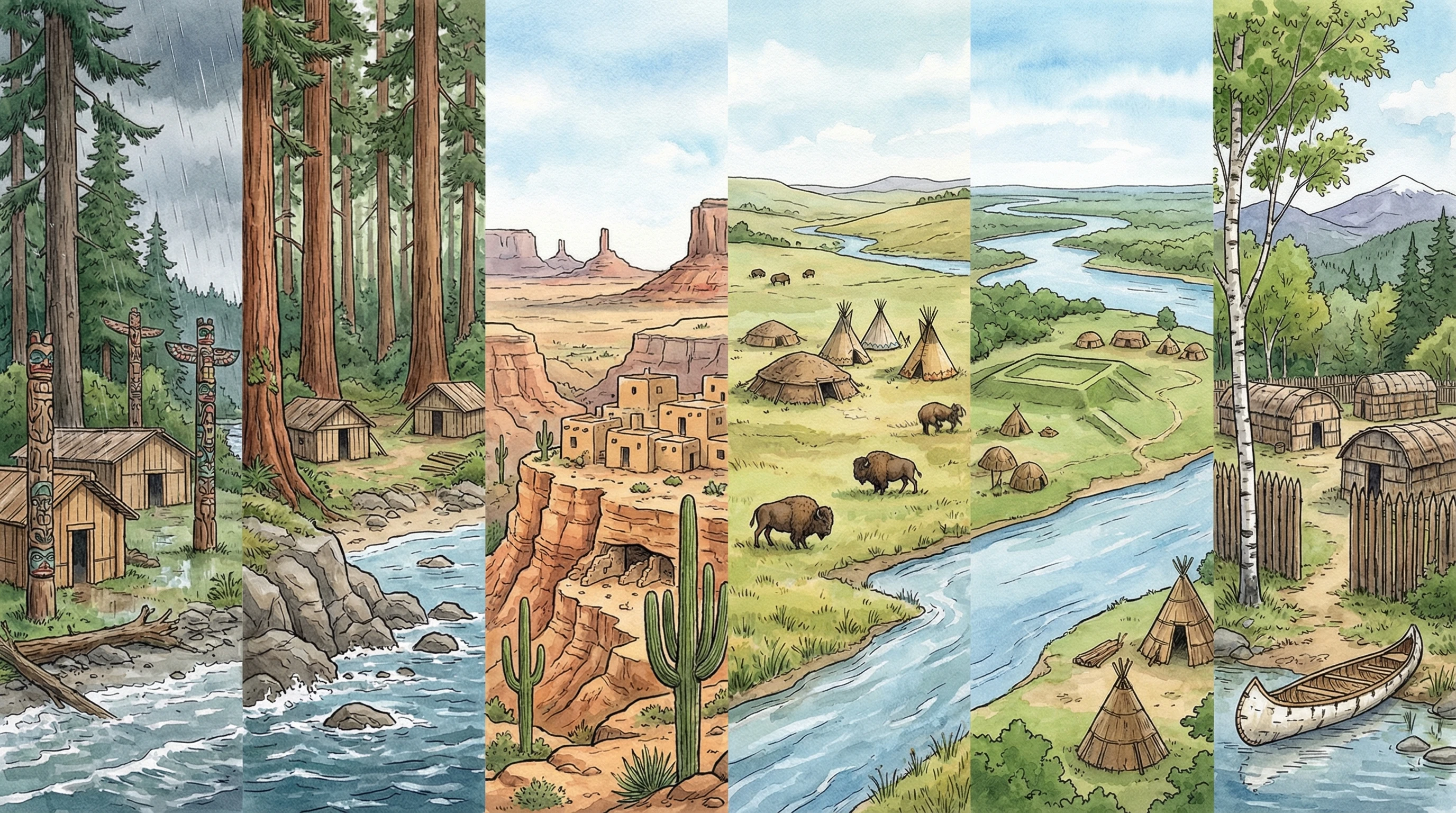
Major Cultural Regions of Pre-Colonial North America
North America before colonization wasn’t one single group, but a patchwork of different nations and cultures, each sculpted by its landscape. Anthropologists commonly group these societies by region because geography played such a big part in shaping food, housing, and social life. Here’s how things broke down:
- Eastern Woodlands: In present-day eastern U.S. and southeast Canada, people like the Iroquois (Haudenosaunee) and Algonquians farmed, hunted, and established early government systems like the Iroquois Confederacy.
- Great Plains: Stretching from Canada down to Texas, these societies, like the Lakota, Blackfeet, and Comanche, became famous for bison hunting and their mobile teepee villages.
- Southwest: Groups like the Hopi and Navajo crafted pueblos and cliff dwellings and ran advanced farming systems in the desert using irrigation.
- Pacific Northwest: Coastal peoples such as the Tlingit, Haida, and Chinook thrived from fishing, woodworking, and holding grand potlatch feasts.
- California: Dozens of groups, like the Chumash and Pomo, harvested shellfish and acorns, showing off some of North America’s best basketry.
- Arctic and Subarctic: Inuit, Aleut, and Dene groups built ingenious snow houses (igloos) and survived harsh conditions thanks to smart hunting and fishing.
- Plateau and Great Basin: These smaller groups adapted to river valleys and dry high desert, each finding creative ways to thrive with fewer resources.
Each region developed their own languages, spiritual practices, tools, and social systems, making North American Indigenous history much more layered than textbooks usually show. Not only did these regions differ in terms of environment and resources, but the diversity extended to belief systems, artistic styles, and governance structures, highlighting a tapestry of adaptation and innovation across the continent.
Village Life, Social Structure, and Political Systems
A typical American Indian village could look really different depending on where you dropped in. Some societies moved throughout the year following game and plants, while others lived all year in permanent towns with hundreds or even thousands of residents. Social roles were assigned not just by age and gender, but by a person’s clan or family lineage. These systems created complex, tight-knit communities with built-in support for elders, children, and those in need.
Government and decision-making also varied widely. The Haudenosaunee Confederacy, for example, developed a political model with checks and balances that some people believe influenced early U.S. democratic ideas. In other places, leadership might rotate or be decided by a council of respected elders.
Many societies used storytelling, oral histories, and ceremonies as both a way to teach the next generation and maintain unity. Trade routes tied societies together, and elaborate systems of alliance, diplomacy, and sometimes warfare shaped regional politics long before Europeans showed up.
In densely populated areas, there were often large council houses for tribal meetings and decision-making, while in smaller bands, leadership tended to be more informal. In both cases, personal reputation and the ability to build consensus were key qualities for those in positions of authority.
Food, Farming, and Hunting Practices
Daily survival involved a ton of knowledge about local plants, animals, and the changing seasons. Farming was especially important in areas like the Eastern Woodlands and the Southwest, where people grew the “Three Sisters”—corn, beans, and squash—for balanced nutrition. In the Mississippi Valley, giant earth mounds still stand in places like Cahokia, leftovers from thriving city-style farming cultures.
On the Great Plains, the arrival of horses (brought later by Spanish explorers) sped up a switch from farming to nomadic, bison-centered life for many tribes. In forested or coastal regions, seasonal harvests of wild plants, nuts, fish, and shellfish formed the backbone of diets. Preservation methods, such as drying, smoking, or storing in clay pots, helped ensure food lasted through lean times, reflecting ingenious strategies for smoothing the seasonal gaps in food supply.
- Fishing: Tribes in the Pacific Northwest built massive wooden canoes and expert fishing tools for salmon runs.
- Hunting: Plains tribes developed complex communal hunts involving entire villages and used every part of the animal for food, shelter, and tools.
- Gathering: People in California and the Great Basin relied on foraging acorns and roots, using specialized processing to remove toxins and increase nutrients.
The knowledge of edible and medicinal plants was carefully passed down through generations, with seasonal festivals often marking important harvest times. These practices weren’t just about sustenance—they formed the backbone of local economies and influenced social customs, rituals, and art.
Housing, Technology, and Arts
People in pre-colonial North America were expert builders and thinkers. In the Southeast, towns often centered around large earthen mounds. These Mississippian cultures built ceremonial complexes that could be bigger than most European cities of the same era. Farther west, the Ancestral Puebloans of Mesa Verde carved apartment-like dwellings into cliffs, offering both safety and insulation.
On the Plains, big families lived in portable teepees, which could be put up or broken down quickly for life on the move. Longhouses in the Northeast, bark houses in California (called tule houses), skin tents, and earth lodges all show how communities adapted to their environments, making homes suited to the local weather and lifestyle without modern materials.
Art and craftsmanship thrived everywhere. Pottery painted with intricate designs, woven baskets, carved wooden masks, beaded clothing, and jewelry made from shells or turquoise all held social importance beyond just their beauty. They often signified status, told stories, or held spiritual meaning. Musical instruments such as flutes and drums were also vital, playing roles in ceremonies, stories, and celebrations.
In addition to functional objects, these societies created objects of next-level cool, like elaborate feathered headdresses, sophisticated textiles, and ornate ceremonial regalia. The signature styles of each region often became symbols of identity and pride, passed along through generations and still celebrated in festivals and art today. The use of natural dyes, tools made of stone or bone, and specialized construction techniques reveals a high degree of technical skill and creativity.
Borders, Trade, and Interaction
Far from being isolated, American Indian nations were linked by a sprawling web of trade routes. Obsidian from the Rockies, shells from the Pacific, copper from the Great Lakes, and turquoise from the Southwest often traveled hundreds or even thousands of miles. Trade allowed for the exchange of not only goods but ideas, technology, and even cultural practices.
Borders between groups were recognized but often fluid, with periods of peace, conflict, merger, or treaty. Diplomacy, kinship marriages, and shared festivals helped maintain balance and allowed for cooperation, even when competition over resources got tense.
Some of the most important meeting spots for trade doubled as sacred or diplomatic grounds where different nations could settle disputes, form alliances, or share news. These networks reinforced the interdependence among different groups and helped ideas, religious beliefs, and even technologies, like new ways of building canoes or making tools, to spread fast across regions.
Challenges to Survival and Adaptation
Even before contact with Europeans, Indigenous societies faced challenges like climate changes (droughts or ice ages), migration pressures, shifting alliances, and internal conflict. Adaptability was key. Many groups changed farming styles, moved territories, or reshaped their social organization to weather tough times. These skills helped them resist or adapt to enormous changes that followed the arrival of Europeans.
Climate and Environmental Changes
Some societies, like the Ancestral Puebloans, faced extreme droughts that prompted entire regions to relocate. Others fine-tuned water usage or got creative with their diets based on available resources. Environmental stewardship, passed down for generations, let communities thrive in forests, deserts, wetlands, and mountains for thousands of years. Numerous societies held spiritual beliefs that encouraged respect for the land and its resources, embedding the idea of sustainability into their cultural outlooks.
Living Legacies of Pre-Colonial Societies
Modern Native American and First Nations communities draw deeply on pre-colonial traditions. Efforts like language revitalization, food sovereignty initiatives, and land stewardship programs all build on skills passed down from ancestors. Indigenous governments continue to operate, sometimes blending ancient protocol with modern politics. Major cities like St. Louis and Montreal actually sit on sites of powerful Indigenous cities that came before them.
Understanding pre-colonial societies helps break down stereotypes and shows the lasting, living legacy of Indigenous achievement in North America. There’s more to check out—from literature to science and contemporary art—that keeps these traditions very much alive.
Many tribes participate in educational outreach, museum programs, and cultural exchanges to get the word out about pre-colonial accomplishments, highlighting findings from archaeological digs, oral histories, and ongoing traditions. These efforts work to lift up Indigenous voices and ensure future generations remember the profound impact of their ancestors.
Frequently Asked Questions
People sometimes have questions about what daily life or innovation looked like in pre-colonial North America. Here are some answers to what comes up the most:
Question: Did Native Americans have cities?
Answer: Yes! Places like Cahokia (in present Illinois) were thriving metropolises with pyramids, markets, and thousands of residents. They served as political, economic, and religious centers centuries before European settlement.
Question: What technologies did pre-colonial societies develop?
Answer: Innovations included irrigation systems, snow goggles, fishing weirs, complex road networks, and detailed astronomy knowledge. Many societies also used sign language to communicate across language barriers.
Question: How are these traditions celebrated or remembered today?
Answer: Powwows, language classes, art, music, environmental restoration, and storytelling all keep pre-colonial practices alive. Many tribes offer tours of archaeological sites, museums, and cultural programs for the public.
Final Thoughts
Getting to know the foundations of pre-colonial American Indian societies gives you a more honest and well-rounded view of North America’s past. Indigenous cultures aren’t frozen in time. They’re thriving, evolving, and still deeply shaping the continent’s future. Next time you see a familiar landscape, imagine it filled with cities, farmlands, and villages connected by roads of trade and tradition, stretching back centuries before the first colony set foot.