
Native American pottery carries a fascinating blend of function, heritage, and meaning. For many Indigenous peoples, these pieces are more than just beautifully shaped containers; they’re windows into stories, beliefs, and traditions passed down for centuries. I’ve found that the symbols on these vessels can tell you a lot if you know how to read them. In this article, I’m breaking down what those patterns are all about, what purposes they serve, and how they’ve managed to stay relevant from ancient times to now.
Understanding the Roots: The Role of Pottery in Native American Life
Pottery isn’t just about craft for Native American communities; it’s deeply woven into daily routines, ceremonies, and family connections. Before modern materials, pottery held water, stored seeds, cooked food, and played a part in special rituals. People learned the craft from elders, with each region and tribe spinning their unique styles, methods, and purposeled creations.
Some groups, like the Ancestral Puebloans or the Mimbres, became famous for their intricate pottery traditions, passing their knowledge through generations. Every rolling pin mark, brushstroke, or carving often linked directly to the land, the animals, and the community living there. This close tie to place makes Native American pottery a reflection of both the artist and the landscape. To this day, pottery remains a living tradition; Native artists may tweak their ancestors’ methods, but the core connection to family lineage and landscape endures. That’s why you’ll often hear potters refer to their work as “living history”—because every vessel is a bridge between generations.
Common Patterns and Their Symbolic Meanings
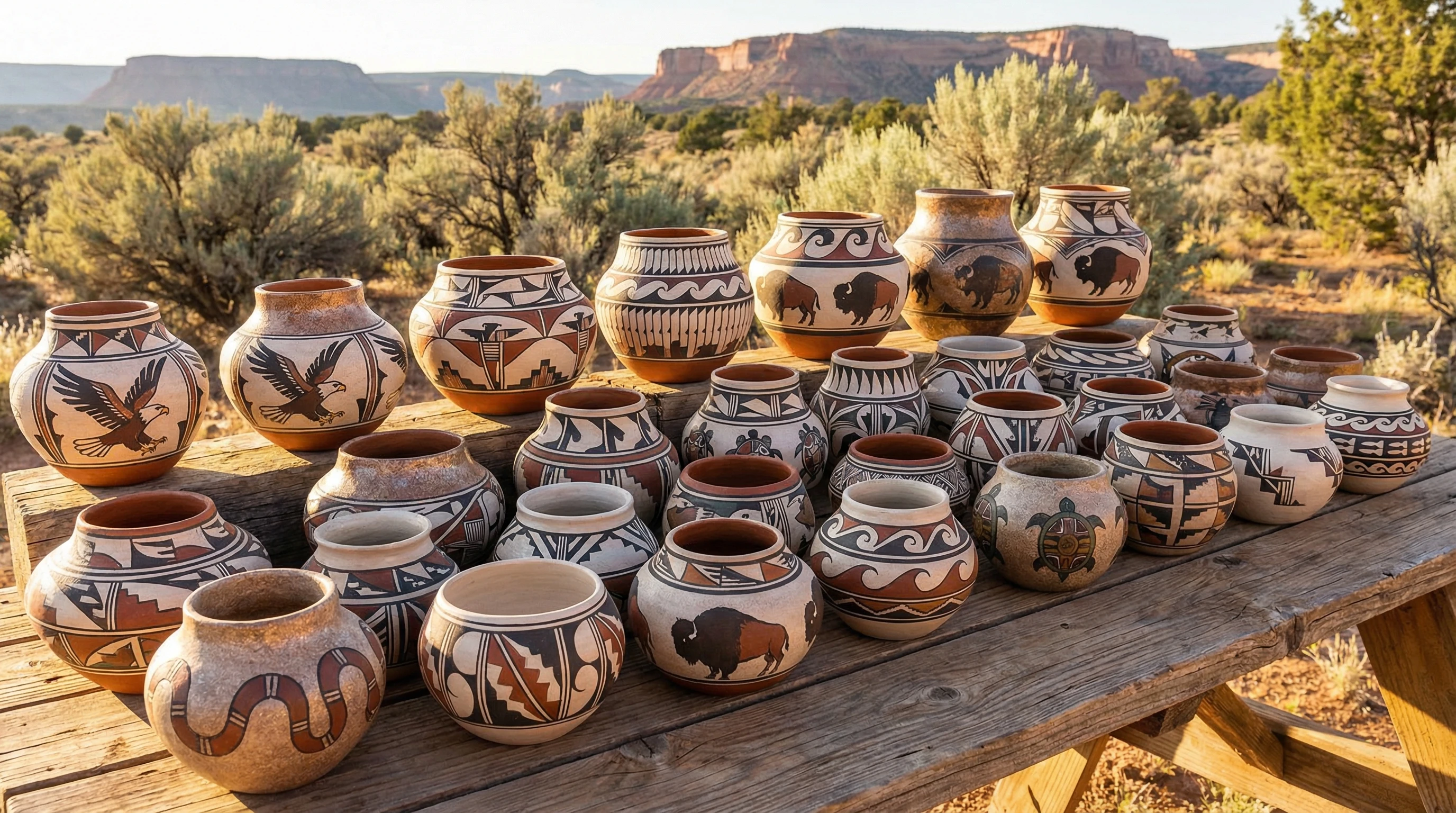
The shapes and symbols covering these pots aren’t random. Every line, swirl, or figure usually means something, whether that’s about local wildlife, the weather, family, or the wider cosmos. There’s a lot of variety, and meanings can switch from one tribe to another, but here are some patterns and symbols you’ll spot again and again:
- Geometric Shapes: Swirls, zigzags, spirals, and checkerboard designs often signal ideas like rain, water, or the flow of life. A repeated triangle pattern may represent mountains or the adventure of a person through life’s different stages.
- Animal Designs: The animals you see, such as turtles, birds, or deer, usually reflect important traits or clan totems. For example, an eagle might stand for spiritual power, while a turtle might point toward a long life or steady pace.
- Natural Elements: Patterns inspired by rivers, clouds, or lightning can call for rain, indicate weather patterns, or celebrate the natural world. Stylized rain lines, for instance, pop up on Hopi and Zuni pottery, showing the importance of water in dry regions.
- Spiritual Motifs: Many pots feature symbols representing the four directions, balance, or connections to spiritual ancestors. The four directions, often marked by crosses or stepped patterns, guide and protect families and communities.
Cracking the code of these patterns is a process. For anyone interested in learning more, visiting local museums or talking directly with artists provides richer insight than just reading from a book. Each pot tells a slightly different story, even if the symbols look similar across pieces. If you ever get a chance, check out community festivals or artist demonstrations, where you might see a potter explaining how her grandmother used the same pattern on a wedding vase. These stories give new life to old designs, making them real and relatable.
Purpose Beyond Decoration: Why These Patterns Matter
These symbols aren’t just for show. Patterns on Native American pottery usually have a job to do; sometimes practical, sometimes spiritual. Here are a few ways those decorations serve deeper purposes:
- Storytelling: Pottery acts a bit like a diary or a family scrapbook, recording special events, hunts, harvests, or even migrations. Some jars might even show famous legends or real community heroes.
- Marking Ownership or Identity: Certain designs signal which family, clan, or village made the pot. If you see distinctive patterns, chances are seasoned collectors or community members can trace the vessel back to a specific region or group.
- Spiritual Protection: Potters sometimes add symbols to guard against harmful spirits or attract good fortune, especially in vessels used for ceremonies or burials.
- Guiding Rituals: When used during planting, healing, or coming of age rites, specific designs bring in spiritual allies or the forces of nature for help.
This connection between symbol and function means that even practical storage jars or bowls come with meaning layered in. Recognizing that context makes the whole craft feel more alive. Today, many artists still keep these stories going—creating pieces that honor the past while setting the stage for new stories in the present.
Techniques and Materials: How Patterns Are Created
Every pattern starts with skilled hands shaping local clay. Most Native American potters use handcoiling, building the pot up coil by coil instead of spinning it on a wheel. Once the shape’s there, artists polish the surface, paint on natural slips made from clay and minerals, and carve or incise patterns using sharp stones, bones, or sticks.
Natural pigments play a big role here. Black comes from carbon or manganese, whites from kaolin or crushed shells, reds and browns from ironrich clay. The way these colors sink into the pot gives each style its own feel, whether shiny or matte, bold or delicate, simple or complex.
- Painted Patterns: Pigments mixed with water, plant sap, or animal fat give color to the surface before firing. The Zuni and Acoma Pueblos are known for superfine line painting, using tiny brushes made of yucca or chewed fibers.
- Carved or Incised Patterns: Some pots get their character from carved lines, which are filled with slip and then wiped clean to leave bold outlines. Santa Clara and San Ildefonso Pueblo potters make great use of this technique with their polished black pottery.
- Polished Designs: Polishing a pot with a stone before or after firing results in a glassy finish. Sometimes, artists etch into the polished surface for a nextlevel cool glow.
The final step, firing, locks in the color. Some artists fire their pots in open pits with wood or dung, allowing smoke to stain areas black for dramatic contrast. In recent years, there’s also been a growing number of artists who mix in some variety by using electric or gas kilns, blending contemporary methods with those of their ancestors. This mix makes each community’s pottery scene distinct—and ever evolving.
Finding Your Way in the Modern Market: Collecting and Appreciating Native American Pottery
Pottery is still made today by Native artists, sticking close to tradition or putting new spins on old forms. Pieces are found in galleries, museums, and home collections all over the world. If collecting Native American pottery interests you, a few things make the process more meaningful for both you and the artist:
- Support living artists by buying directly from them at markets or reputable dealers recognized by Native organizations. This ensures your money goes back to the right communities.
- Look for signatures or hallmarks on the base. Many artists today sign their work, sometimes blending their names or stamps with traditional patterns.
- Take time to study the forms, patterns, and materials. Authentic handmade pottery will show slight irregularities—a steady hand can only do so much! Perfect uniformity is often a sign of mass production.
Careful research helps buyers make informed decisions and shows respect for the makers and their communities. If you’re ever unsure, it’s best to ask questions at reputable galleries or to connect with museums dedicated to Native American arts.
Common Challenges When Interpreting Symbols
It’s easy to misread patterns if you don’t know the context. Tribal styles, artist preferences, and changing times mean the same symbol can mean something totally different depending on where or when it was made. Sometimes artists intentionally use abstract designs to protect spiritual secrets, so not everything can—or should—be explained fully without community guidance. Staying sharp and making room for stories you might not know is a sign of respect for these living traditions.
Deeper Meanings: Symbolism in Everyday Use
Even with all the care put into patterns, these weren’t just museum pieces. Many pots were made for daily use and handled by all ages. The fact that they’ve lasted this long, even as functional items, is pretty impressive. In homes, a water jar with wave designs wasn’t only about art; it reminded everyone of the value of water and the cycles of the seasons. A bowl with a feather motif used at a feast linked everyone at the table to ancestors and the wider natural world.
This mix of beauty and use is one of the main reasons Native American pottery keeps drawing in new admirers. As more people stumble upon these patterns, their stories continue to ripple outward, broadening understanding and appreciation for vibrant Native traditions. It’s a reminder that art can be both practical and symbolic, a bridge spanning daily life and heritage.
Frequently Asked Questions
Lots of questions come up when you’re new to the topic of symbolism in Native American pottery. Here are a few I hear often:
Question: Do all patterns have a specific meaning?
Answer: Many do, but not all. Some patterns are traditional and passed down for their look or association, while others have very individual meanings tied to the artist, their story, or the pot’s intended use.
Question: Can nonNatives learn the meanings behind these symbols?
Answer: Learning is always possible, especially when approached with respect. The best way is by getting involved directly with Native artists, museums, or educational resources run by the communities themselves.
Question: How do I spot authentic Native American pottery?
Answer: Genuine pieces are usually handmade, show some asymmetry, and often come with an artist signature or hallmark. When in doubt, buy from experts or at markets where artists are present.
Symbolism in Native American pottery connects past to present, story to object, and artist to community. By taking a bit of time to learn what these patterns are saying, I’ve found it really opens up a whole new appreciation for both the artistry and the people who keep these traditions alive. Wrapping up, if you ever get the chance to hold a piece of Native pottery in your hands, take a moment to picture the maker’s story and the traditions carried in every line. From practical use to spiritual roots, Native American pottery continues to amaze and inspire new generations every day.