
The dreamcatcher is probably the most recognizable symbol you’ll find when it comes to Native American traditions. With its signature web, beads, and feathers, you see it everywhere, from car mirrors to tattoo art. It’s more than a cool decoration, though. There’s a meaningful story behind the dreamcatcher, full of spiritual significance, intricate symbolism, and rich cultural history. I’m here to walk you through its origin and what every piece truly means.
Where Did the Dreamcatcher Come From?
Dreamcatchers are woven into Native American history, but their roots trace way back to the Ojibwe people (also called Chippewa). The Ojibwe crafted the earliest dreamcatchers by hand, using willow hoops, natural fibers, and decorated with sacred items like animal sinew and feathers. These handmade pieces weren’t just art projects; they held deep spiritual meaning and protective power.
According to Ojibwe tradition, dreamcatchers were created to protect sleepers, especially young children, from unwanted dreams and negative spirits. The web inside the hoop was said to catch the bad dreams so they wouldn’t disturb restful sleep. This original belief spread across tribes and even changed form a little, as other Native cultures like the Lakota adapted the dreamcatcher for their own customs, sometimes with different stories and looks.
Today, dreamcatchers are widely recognized across North America and beyond. While they’ve been adopted by other cultures and sometimes commercialized, the real heart of the dreamcatcher comes from these old Ojibwe legends and handcrafted skills handed down over generations. Many still value the traditional ways and stories, keeping the spiritual side alive even as dreamcatchers take on new forms in modern times.
Symbolism Behind the Dreamcatcher
Nothing about a dreamcatcher is random. The symbols and materials carry meaning, often tied to nature, protection, and the cycle of life. Here’s a breakdown:
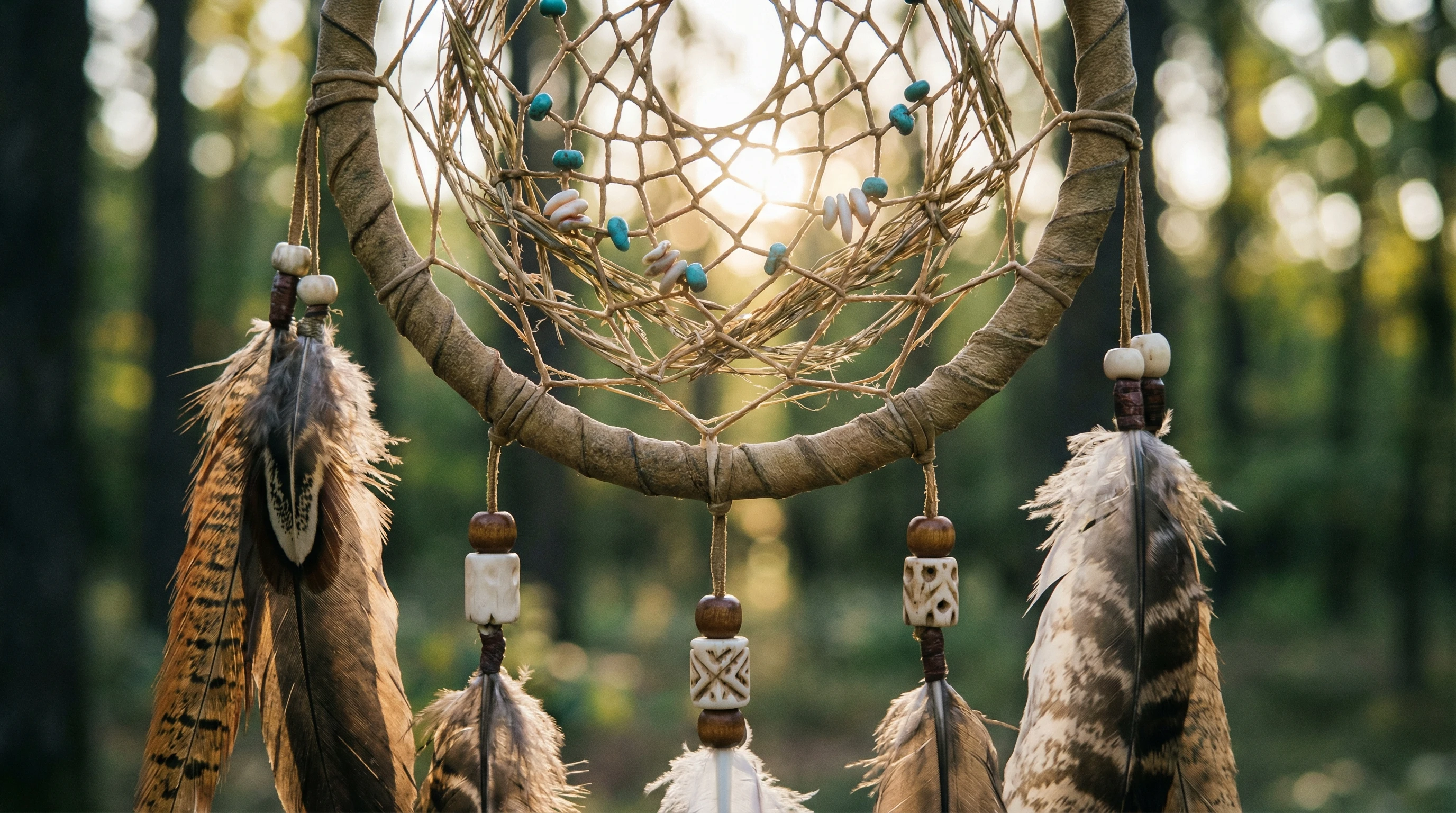
- The Hoop: Usually circular, the hoop represents the circle of life. It’s a reminder that everything is connected and the seasons keep turning without end.
- The Web: This is what most people instantly recognize. Woven from string or sinew, the web mimics a spider’s web, which in Native beliefs is a symbol of protection and comfort. The web snags any bad dreams in the air, preventing them from reaching the sleeper.
- The Beads: Some dreamcatchers have small beads woven into the web. Depending on who made it, these beads might symbolize the good dreams that get caught, or safe passage of positive thoughts.
- The Feathers: Feathers are always present for a good reason. Hanging below the hoop, they guide the good dreams gently down to the sleeping person. Some traditions use a specific bird’s feather, like owl for wisdom or eagle for courage.
The most common version says that as you sleep, the dreamcatcher only lets positive dreams slip through the web and float down the feathers to you. Nightmares are snagged in the web and fade away with the first hint of morning sunlight.
How Traditional Dreamcatchers Are Made
Crafting a traditional dreamcatcher takes time, patience, and intention. Here’s a quick walkthrough of how it typically happens:
- Gathering Natural Materials: Original dreamcatchers used a flexible willow branch bent into a circle and tied at the ends. String was made from natural fibers or animal sinew.
- Forming the Hoop: The willow is softened, then shaped into a firm hoop. Sometimes, the hoop is wrapped with leather for extra strength and beauty.
- Weaving the Web: Using a special technique, string or sinew is looped and knotted around the hoop. The process is somewhat like preparing a fishing net, but each knot has symbolic significance.
- Decorating With Beads and Feathers: Once the web is complete, beads or stones might be woven in, then one or more feathers are tied to the bottom or sides of the hoop.
Many Native makers perform this craft in a focused, mindful state, sometimes with prayer or positive thoughts, hoping to infuse their dreamcatchers with protective energy. The intention and care put into each step show respect for the spiritual aspect of the tradition and ensure the piece is not just decorative, but meaningful.
Stories and Legends About Dreamcatchers
When you get into Native stories, the dreamcatcher legend often centers on a mystical spider woman named Asibikaashi. She looked after children and the people of the land. As the Ojibwe community spread out, it became difficult for her to protect every child, so mothers and grandmothers began weaving small webs to hang above the cradles, inviting the spider woman’s spirit to remain close, always guarding the next generation.
Other Native tribes, like the Lakota, tell a different story. Their legend describes a spiritual leader who had a vision of Iktomi, the Trickster and Great Teacher, who spun a web and spoke about life’s good and bad forces. The web in the hoop would catch the good, while the hole at the center allowed the bad to slip away, symbolizing decisive wisdom and letting negativity exit.
The Meaning Behind Feathers, Beads, and the Web
Each part of a dreamcatcher holds more meaning than you’d think at a glance. The feathers at the bottom play a big role; they represent the gentle touch that lets good dreams pass down softly. In many designs, you’ll spot a moth or butterfly on or near the web, symbolizing transformation, hope, and, more specifically, blocking nightmares. Some people say that the moth, caught in the web, represents negative dreams “caught” overnight so they’ll dissolve in daylight.
Beads can have many stories. Sometimes, a single bead is placed in the center to represent the spider itself, acting as the protector and weaver of fate. Other times, multiple beads mean good dreams filtered through, or they simply highlight the individuality of the crafting process. Each bead can embody a different wish, memory, or idea the maker wants to bring to the sleep of the user.
Common Uses Of Dreamcatchers Today
While originally designed for children, dreamcatchers are now included in homes, meditation spaces, cars, and even in wearable art. People hang them as spiritual decor or as a nod to their heritage, or simply because the design appeals to them. Even if someone isn’t aware of the traditional meaning, a dreamcatcher can offer comfort, serving as a kind of gentle reminder to protect one’s peace and sleep.
- Some display dreamcatchers to bring comforting vibes, or as a daily sign of mindfulness and spiritual care.
- Others use them in baby nurseries for protection and as a heartfelt tradition.
- Dreamcatchers are popular as craft projects in schools and at cultural festivals, helping to pass on Native stories to younger generations.
Even with modern twists, like adding crystals, shells, or using synthetic materials, the core symbolism is kept alive when makers respect the origin and cultural sacredness. The act of making or owning a dreamcatcher can be a way to connect with history, family, and a sense of well-being.
Tips for Choosing or Making a Dreamcatcher
- Size: Stick with palm-sized dreamcatchers for traditional use. Oversized ones can be fun, but the originals were meant to be subtle and personal.
- Material: Whenever possible, pick one made from wood, leather, or natural fibers. Mass produced dreamcatchers aren’t always respectful of tradition.
- Purpose: If you’re buying for spiritual reasons or cultural respect, look for legitimate Native makers or artists. Supporting real Native craftsmanship is really important—for both authenticity and the community.
- Meaning: Ask about the maker’s story or intended symbolism. Feathers, stones, and beads might have extra meaning that adds to the piece’s energy.
Frequently Asked Questions
Still have a few things you’re wondering about? Here are some questions I often get about dreamcatchers:
Question: Are dreamcatchers only for children?
Answer: Originally, they were made for babies and children. Now, people of all ages use them—for comfort, sleep, or simply as a meaningful home decoration.
Question: How do I know if a dreamcatcher is authentic?
Answer: Look for handmade dreamcatchers sold by Native artisans. Supporting Native-owned shops or purchasing at cultural events is a good way to find an authentic piece. You can also check for stories about the makers or special materials that show care and real tradition.
Question: Is it okay to make my own dreamcatcher?
Answer: Making your own is fine, especially if done with care and respect for the cultural roots. It’s a good opportunity to learn about the history and symbolism as you create, and it can be a personal act of reflection or mindfulness.
Question: What’s the meaning of the moth or butterfly on some dreamcatchers?
Answer: These symbols usually stand for transformation, renewal, and spirit. In some designs, the moth represents nightmares trapped in the web overnight, kept away from the sleeper until they vanish in the morning.
Dreamcatchers in Modern Culture
Dreamcatchers continue to show up everywhere, from festivals to fashion, and in home decor. It’s worth remembering, though, to honor their meaning and roots. When you buy or make a dreamcatcher, take a moment to reflect on the stories, culture, and people who inspired this symbol. Appreciating the real meaning behind a dreamcatcher adds a little more intention and respect to your daily life, no matter where you hang it. Choosing authenticity and taking time to learn about its roots keeps the tradition respectfully alive.