
Music has been at the heart of American Indian societies for thousands of years. Across North America, music and instruments carry powerful meanings, tell stories, mark life changes, and build community. Whether it’s the pulse of a powwow drum or the soft notes of a cedar flute, these sounds connect people to one another and to their history.
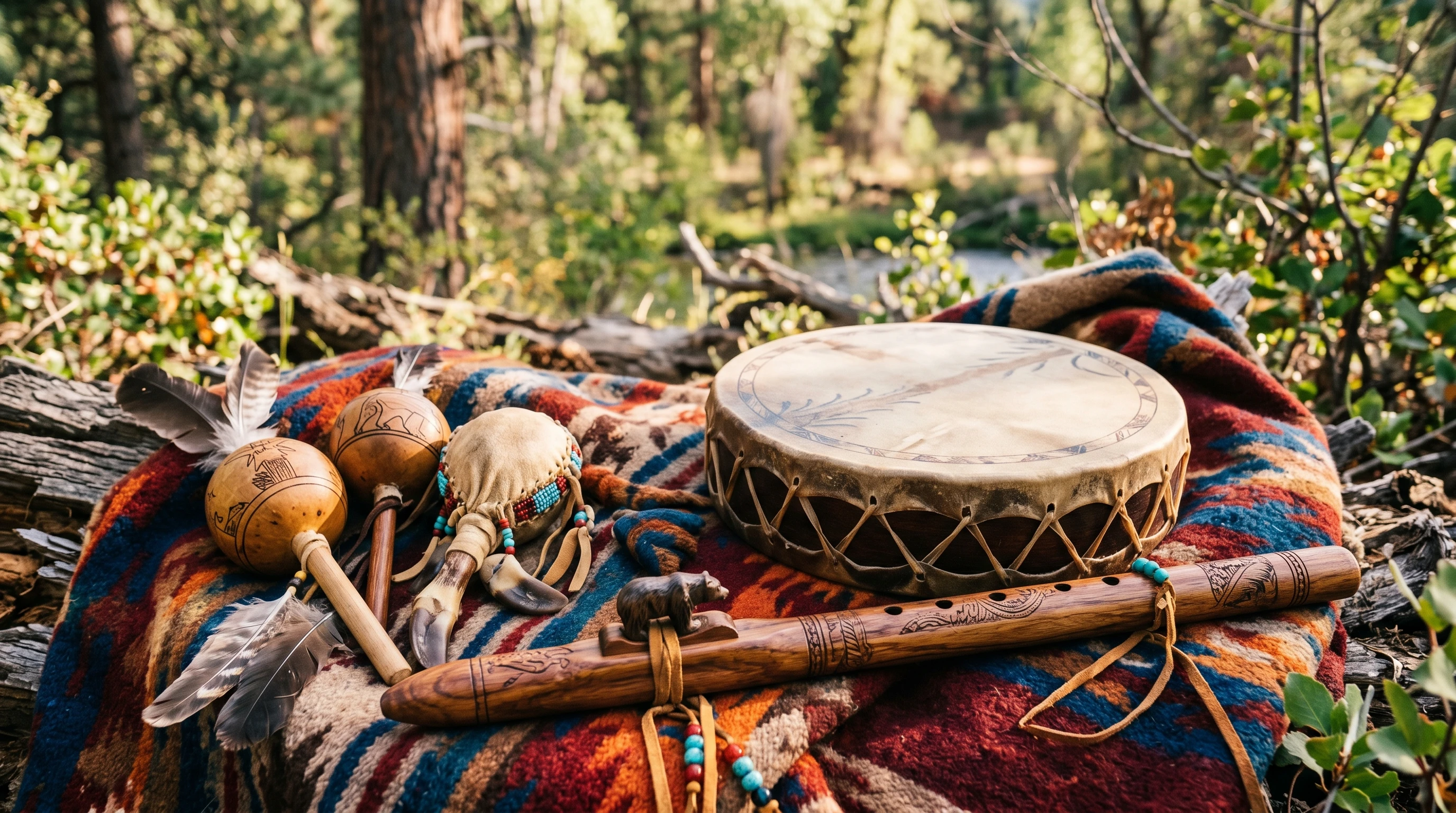
American Indian Music: More Than Entertainment
Music in American Indian cultures is much more than background sound or casual entertainment. It plays a central role in daily life, spiritual practices, and social gatherings. Every region and tribe has its own style, instruments, and traditions. Some songs are intended for ceremonies, while others accompany working, teaching, or celebrating.
Through song, many communities share important teachings, oral histories, and tribal values. Sometimes the music sets the rhythm for dances, or marks the start of seasonal events. In other cases, it is a private prayer or a way to heal and comfort someone who’s hurting. That’s why when I listen to a traditional song, I’m not just hearing notes. I’m hearing generations communicate and pass down wisdom.
Getting Familiar with Traditional Instruments
Exploring American Indian music means getting to know the instruments that shape its sound. Most instruments are made from materials found in nature, each carrying distinct voices and stories. Many artists, builders, and storytellers keep these traditions alive, maintaining skills that have been handed down through families and communities.
- Drums: The drum is often called the “heartbeat” of American Indian music. There are hand drums, water drums, and large powwow drums played by groups. Buffalo or deer hide is stretched over wooden frames, creating a resonance that can be felt as much as heard. The rhythms can be steady or wild, depending on the dance or ceremony.
- Rattles and Shakers: Crafted from gourds, turtle shells, or carved wood, these add texture to songs and are especially popular in healing and social dances. Their subtle sounds can blend in with vocals or stand out in a group.
- Cedar Flutes: Flutes carved from wood, often cedar, are celebrated for their sweet, airy tone. These flutes play a big role in love songs, courtships, and even stories about creation, where the sound is sometimes said to echo the wind or nature’s own voice.
- Whistles and Bird Calls: Some tribes put to work bone or wood whistles to mimic birds, whether calling in game during hunts or honoring spirits during rituals. The connection to nature remains central.
- Stringed Instruments: Though less common in Native societies, instruments like the Apache fiddle are important in some regions. This single-stringed instrument, played with a bow, adds a unique flair to storytelling and celebration.
Where You’ll Hear Music Most
Certain settings bring American Indian music into the spotlight. Community events, ceremonies, private prayers, and social dances all have specific soundtracks, and each serves a special purpose. Here’s a glance at where music plays a vital role:
- Ceremonial Circles: Songs are often shared to promote healing, draw rain, mark harvest seasons, or guide coming-of-age rituals. The surroundings become alive with voices, drums, and spirit.
- Powwows: These social gatherings pull in dancers, drummers, and singers from all over. Competition songs, honor songs, and even playful ones keep the energy high and the community close-knit.
- Everyday Life: Singing takes place while people work, travel, or raise children, keeping traditions alive and passing on language and values to younger generations in a natural way.
Things To Know When Exploring American Indian Music
Getting to know this music means going further than just clicking on a playlist. American Indian music comes with context, purpose, and meaning. Here are a few important things to remember when sharing or learning about these traditions:
- Respect for Sacred Songs: Not all songs are meant for everyone’s ears. Some are reserved for certain rituals, seasons, or people. It’s crucial to check if a song is private or sacred before sharing it publicly or online.
- Diversity Across Tribes: Just like there’s no single “European music,” there’s no single American Indian music style. Each nation has unique scales, rhythms, and uses for music. For example, the vocal style in Plains communities stands apart from the melodic chants in the Southwest.
- Contemporary Blends: Many Native musicians today mix tradition with rock, reggae, country, and hiphop. Groups like A Tribe Called Red or musicians such as R. Carlos Nakai prove that living traditions can adapt and grow, speaking to new audiences and the next generation.
How Songs Are Shared and Passed Down
Learning a song in many American Indian communities isn’t about reading sheet music. Songs are taught orally, with people singing along with elders or listening at gatherings until the melodies and rhythms become second nature. This method keeps songs living and lets them change slightly with each generation, which adds to their strength and beauty.
Interpreting Lyrics and Meanings
Some songs are sung in tribal languages, with stories or lessons tucked inside the lyrics. Others make use of vocables—syllables that don’t have direct translation but carry deep feeling and spirit. The tone of voice, its rise and fall, and how it blends with the music often send a message just as strong as the lyrics themselves. This is how music continues to honor ancestors and keep emotions alive.
Common Challenges for Musicians and Learners
Learning and sharing American Indian music isn’t always straightforward. Here are some common obstacles that people talk about:
- Language Barriers: As many tribal languages are spoken less often, fewer people can fully understand some songs. Language revitalization projects and immersion camps help keep these treasures alive and meaningful.
- Loss of Elders: Elders are the primary keepers of many songs and musical traditions. Losing elders before the next generation can learn from them puts much knowledge at risk. Song recovery nights and archives are ways some communities work to safeguard this knowledge.
- Instrument Access: Authentic instruments need special skills and materials to build. While replicas are available, the sound and power of handmade drums or flutes built using traditional knowledge feel unique and meaningful.
- Cultural Appropriation: People not connected to the community sometimes use music or regalia without understanding their importance, which can cause harm. Building trust and asking permission is key before sharing or recording cultural music.
Language Barriers
Many songs are sung in tribal languages, some of which might not be commonly spoken today. Sharing recordings, organizing immersion camps, and working with language teachers help bridge the language gap and ensure the younger generation stays connected to the songs’ roots.
Loss of Elders
When the knowledge of songs lives mainly in elders’ memories, there is a real risk that unique melodies could be lost. Communities often host gatherings dedicated to singing, recording, and cataloging traditional songs to prevent this loss and keep the repertoire alive.
Instrument Access
Making authentic drums, flutes, and rattles often requires special skills handed down through apprenticeship. While online stores and museum displays provide some exposure, having a mentor who builds instruments by hand can deepen a learner’s connection and sense of respect for the music.
Cultural Appropriation
Interest in American Indian music sometimes leads outsiders to record or perform songs or wear sacred regalia without understanding their meaning. I always recommend checking with community members and giving credit or background when sharing music that doesn’t belong to you directly.
Tips for Learning and Enjoying American Indian Music
Curious listeners and musicians can do several things to get the most from this music culture:
Start With Local Communities: Attend public powwows or cultural events to hear music firsthand. Many have open dances or music workshops where you can pick up new rhythms and make friends.
Explore Multiple Styles: Seek out both traditional recordings and modern blends. Albums by Buffy SainteMarie, flute music from R. Carlos Nakai, or drum group Northern Cree showcase how traditions continue to change and inspire. Modern powwow festival DJs or indigenous rock bands often add nextlevel cool to familiar instruments.
Try Making Simple Instruments: Drum and flute kits, homemade rattles, or crafting workshops can help you understand how these sounds are created. Even building a basic gourd rattle gives insight into traditional rhythm and sound.
Ask Before Sharing: Not all songs or performances are meant to be spread online. When in doubt, check with event organizers or musicians about what’s considered okay to record or post.
RealWorld Uses for American Indian Instruments
- Storytelling and Theater: Many schools and theater groups use Native drums and flutes in plays or storytelling events, adding powerful atmosphere and making each story stand out.
- Healing Practices: Drum or rattlebased songs remain at the heart of comfort, prayer, and healing among indigenous groups like the Navajo or Lakota, carrying powerful intentions.
- Modern Music Genres: Indigenous rock bands and “powwow step” DJs showcase traditional instruments on modern festival stages, introducing them to entirely new audiences and styles.
Frequently Asked Questions
Question: Why do different tribes have different music styles?
Answer: Geography, available materials, and unique cultural histories shape how each nation sounds. For example, Cherokee flute melodies and Plains drum songs each reflect their people’s environment, values, and history.
Question: Is it okay to make and play Nativestyle instruments if I’m not Native?
Answer: Learning about and making instruments is wonderful, but it’s best to avoid sacred designs and songs. Always be clear about your intentions and never present yourself as a traditionbearer if that’s not your culture or background.
Question: Are there resources for learning Native American music?
Answer: Tribal museums, cultural centers, and online documentaries are great starting points. The National Museum of the American Indian, for example, offers workshops and educational programs for people interested in learning and supporting indigenous music traditions.
Sharing and Supporting These Traditions
American Indian music and instruments tell stories that stretch back for thousands of years, and yet they remain vibrant and evolving today. By learning from Native communities, respecting protocols, and supporting Indigenous artists, everyone can play a role in helping these living traditions thrive. Each song, drumbeat, and handmade instrument enriches the whole landscape of North American music. Sharing these experiences brings us all a little closer to the spirit, beauty, and power of these special musical traditions.