
Understanding the landscape of Native American languages reveals a living history that stretches back thousands of years. While these languages are often grouped together, each one is a unique window into rich cultural traditions and creativity. I find it fascinating how language connects to sense of place, history, and identity. Especially across North America, where hundreds of languages have thrived. Here’s a practical guide to the major Native American languages, why they matter, and what you should know if you’re interested in their present and future.
What Are Native American Languages?
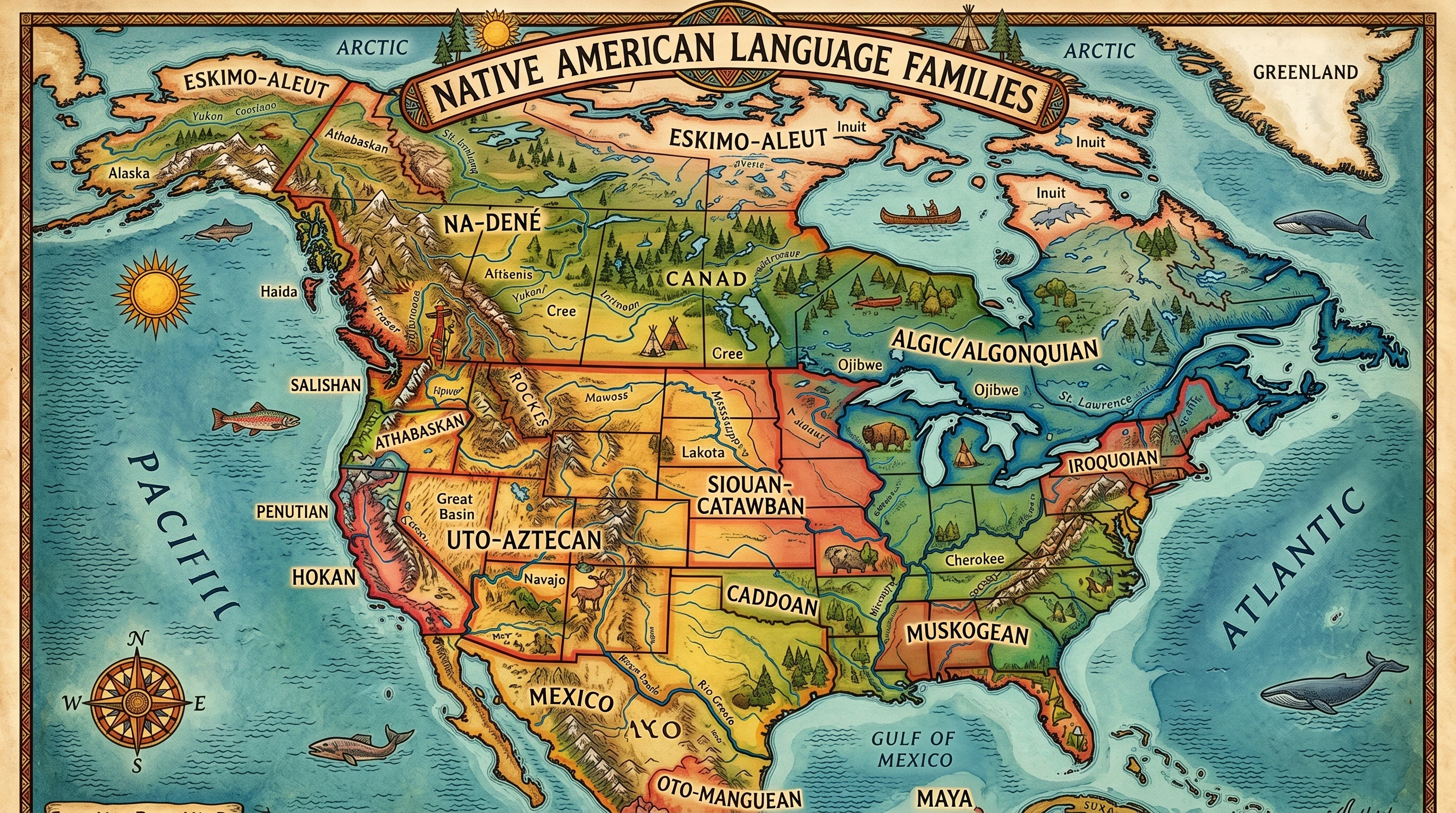
Native American languages are spoken by the Indigenous peoples of North America, from Canada down through the United States and into Mexico. Linguists typically break these languages into families, groups that are related through a distant common ancestor, sort of like branches on a family tree. Some Native languages, though, are isolates, meaning they’re not known to be related to any others.
Long before English or Spanish arrived, these languages formed the backbone of cultural, political, and social life across the continent. Today, there are about 170 Indigenous languages still spoken in the United States and Canada, though only a few have large numbers of speakers. Many have adapted over the years, incorporating new words and evolving just like any living language. Some are thriving, while others face serious challenges. This is mostly due to a long history of displacement and exclusion from mainstream education.
Major Native American Language Families
The diversity among Native American languages is pretty staggering. The largest families in North America each cover a wide geographic range and include several distinct languages.
- Algonquian: Languages in this family stretch from the Eastern United States up through Canada. Some familiar ones are Ojibwe, Cree, and Blackfoot. The Algonquian group was one of the first encountered by European settlers, which led to many borrowings into English and French.
- Iroquoian: This family is known for Mohawk, Seneca, Cherokee, and a handful of others. Mostly spoken around the Great Lakes, the northeast, and the southeast, these languages played a huge role in regional history.
- Siouan: Including Dakota, Lakota, Crow, and others, these languages were spoken widely across the central plains, the Dakotas, and even into the southeastern US. Some, like Lakota, remain active in daily life and cultural ceremonies.
- UtoAztecan: One of the largest families stretching from the western US into Mexico, it includes languages like Hopi, Ute, Shoshone, and Nahuatl. Nahuatl, the language of the Aztec Empire, still has millions of speakers in Mexico today.
- Athabaskan (Dene): Spoken from Alaska and western Canada down to the American Southwest, this family includes Navajo, one of the best-known Native American languages. Navajo code talkers famously played a role in World War II.
- Muskogean: This family covers the Southeast, with languages like Choctaw, Creek (Muscogee), Chickasaw, and Seminole. Some are in active use and have seen successful language revitalization programs.
Notable Individual Languages
While families offer a broad overview, individual Native American languages each tell their own story. Here are a few you’ll often hear about, plus some practical notes on where you might encounter them today:
- Navajo (Diné Bizaad): Spoken by around 150,000 people, Navajo is the most widely used Native language in the US. It plays a strong role in schools and homes across the Navajo Nation, which covers parts of Arizona, New Mexico, and Utah.
- Cherokee (Tsalagi): Known for its creative syllabary writing system invented by Sequoyah, Cherokee is taught in schools and used in community newspapers. There are a few thousand speakers today, mostly in Oklahoma and North Carolina.
- Ojibwe (Anishinaabemowin): Spoken across the northern Midwest and into Canada, this language has many regional varieties and is a focus of revitalization projects, including immersion schools.
- Mohawk (Kanien’kéha): A highly visible language in upstate New York and Quebec, Mohawk features in community radio, signage, and cultural events.
- Hopi: Still spoken in Hopi villages in Arizona, this language remains central to Hopi ceremonies and traditional knowledge. Hopi uses its own writing systems and bilingual education materials.
- Inuktitut: Found mainly in the Canadian Arctic, Inuktitut is an Inuit language with official status in parts of Canada and a growing library of contemporary literature and media.
Getting Started: Key Terms and Language Basics
Starting out with an interest in Native American languages means learning a few practical terms and understanding what sets these languages apart. Here are some basics worth knowing:
- Language Family: A large group of similar languages. It’s helpful to know the family before looking up learning materials.
- Fluent Speakers: This usually means people who picked up the language from birth, but revitalization efforts are producing new speakers of all ages.
- Revitalization: Organized community efforts to teach and encourage use of a language, often through schools, media, and language nests (early childhood immersion programs).
- Syllabary: A writing system in which each symbol represents a syllable instead of just one sound. Syllabaries are pretty handy for teaching, and the Cherokee syllabary is a famous example.
The Real-Life Value of Native American Languages
These languages aren’t just museum pieces. They’re living things that tie families, communities, and land together. Here are a few examples of why they matter so much today:
- Knowledge Carriers: Native languages hold a ton of cultural knowledge, from traditional ecological understanding to songs, stories, and laws that don’t always translate easily to English or other languages.
- Identity and Pride: Speaking an ancestral language is a source of pride and a key part of feeling connected to Native identity. Language learning is often at the heart of cultural resurgence movements.
- Legal and Educational Rights: Some Native American groups are working hard for the right to teach children in their own language at school, make official documents available, and keep languages in daily life.
- Community: Language is a way to bring people together, with community radio broadcasts, language classes, and storytelling nights all helping reinforce the ties between generations.
Challenges Native American Languages Face
The truth is, most Indigenous languages in North America are at risk, with a shrinking number of speakers. Colonial history, forced boarding school policies, and pressure to speak only English have each played a role. Many communities are turning things around, but there are still real hurdles. Here are some factors that come up often:
- Speaker Age: In many cases, fluent users are elders. Passing the language on to young people is super important, but it can be a struggle with competing demands from school or work.
- Resource Gaps: Not every language has textbooks, apps, or even a formal writing system. Creating materials from scratch takes time, patience, and funding.
- Technology: Some Native languages are getting modern support through digital dictionaries, language learning apps, and YouTube classes. That said, internet access and digital literacy are still barriers in some remote regions.
Examples of Revitalization Success
I’ve seen lots of creative efforts to give Native American languages new energy. The Hawaiian language movement (ʻŌlelo Hawaiʻi) is one of the most celebrated examples from the broader Indigenous world. Hawaii had almost no child speakers at one point, but now, immersion preschools and high school programs make the language a living part of the community again. In the continental US and Canada, Mohawk, Cherokee, and Ojibwe programs are building similar success, one classroom at a time. These language revitalization projects show how local communities can spark a cultural comeback through education and dedication.
In Alaska, the revitalization of Gwich’in and Yup’ik stands out, with villages developing their own curriculums and connecting fluent elders with young students. Some tribes in Oklahoma and the Southwest are sponsoring summer camps and digital storytelling nights, bringing language into everyday digital spaces. Across Canada, the Mi’kmaq language is being taught with smartphone games and creative social media, making younger generations more interested in their linguistic roots. These stories underline the persistence and creativity of Native communities when it comes to keeping their languages alive, no matter the obstacles.
Practical Steps to Learn or Support Native American Languages
If you’re interested in these languages, it helps to connect with a community or organization that supports them directly. Here are a few tips that I think are really helpful:
- Start with a language you’re personally interested in, maybe one from your ancestry or your local area. Passion makes a difference.
- Look for online courses, community classes, or resources from tribal colleges and Native community centers.
- Many tribes and Native organizations have digital archives, audio lessons, and even mobile apps. For example, the Navajo Language Renaissance group or the Cherokee Nation’s language portal are worth checking out.
- If you’re not from a Native background, learning just a few greetings or place names in a local language can help build respect and awareness.
- Support local language events, radio shows, or cultural gatherings where Native languages are being actively used. Even a simple shoutout on social media can help spread the word and get others involved.
Learning a Native American language takes patience, but finding a mentor or participating in virtual groups can make the ride much more rewarding. Communities are looking for learners who show respect and curiosity, so don’t hesitate to ask how you can help. Every effort counts in bringing a language back into daily life.
Frequently Asked Questions
I get a lot of questions about Native American languages, so here are a few common ones with practical answers:
Question: How many Native American languages are still spoken?
Answer: Around 170 Indigenous languages are still in use today in the United States and Canada, although some have only a handful of fluent speakers.
Question: Can I learn a Native American language if I’m not Indigenous?
Answer: Yes! Many communities encourage respectful learners. Connecting with Native-led classes or organizations shows you’re approaching it with care.
Question: Are there apps or websites to help study these languages?
Answer: There are apps, YouTube channels, and digital dictionaries for quite a few languages, including Navajo, Dakota, Cree, and Ojibwe. Community websites often link to these tools.
Question: Why are so many Native American languages endangered?
Answer: Loss of speakers due to historical policies, limited resources, and less daily use in the community are main reasons. Recent language revitalization efforts are working to change this trend.
Native American languages thrive in classrooms, cultural events, homes, and even on smartphones these days. Keeping them alive helps preserve unique cultures, build pride, and support resilient Native communities for generations to come. If you’re interested in learning more or lending support, connecting with local language advocates and joining conversations goes a long way. There’s a lot to track down, and every new learner adds to the story.