
Animals play a really interesting and unique role in Native mythology. All over the world, Indigenous stories use animals as teachers, protectors, tricksters, and guides. The connections Native peoples have with animals are deep, often tied to the environment, spirituality, and cultural identity. In this article, I’ll share what I’ve learned about how animals appear in Native myths, why certain animals matter, and what these stories mean for communities today.
The Place of Animals in Native Mythology
Many Native cultures see animals as more than just creatures living beside people. In lots of Native mythologies, animals have their own personalities, gifts, and wisdom to share. These stories can be found in Native cultures in North America, South America, Africa, Australia, and beyond. Each group has its unique way of seeing the animal world.
For example, animals in Native American beliefs are sometimes seen as spirit beings or helpers. Traditions like those of the Lakota, Haida, Ojibwe, Cherokee, and Navajo often treat animals as relatives. It’s normal to hear people say things like “animal people” to show respect. This attitude pops up in everyday life and in sacred stories, where animals help explain the world, teach important lessons, and keep cultural knowledge alive.
Why Animals Are So Important in Native Stories
It’s no accident animals have such a strong presence in these stories. Before modern science explained how things work, Native peoples often looked to animals for clues about how to live. Watching how bears hibernate or how birds migrate helped people make sense of the seasons, weather, and even health.
Animals are also linked to family, land, and leadership. Some Indigenous people have animal clans. In Ojibwe culture, for example, there are bear, crane, and loon clans that come with special roles and responsibilities. These connections aren’t just symbolic, they also guide who you can marry and what kinds of jobs you might do in the community.
On top of that, animals show up in rituals, songs, dances, and art. Many tribes use animal imagery to decorate masks, totem poles, baskets, and clothing. These designs aren’t just for looks. They remind people of their history, values, and relationship with the natural world. When you check out museum collections or Native art galleries, you’ll notice animal patterns serving as visual storytelling, keeping these traditions alive for the next generation.
Some Well-Known Animals in Native Myths
Stories about animals aren’t all the same, but there are definitely some animal characters that pop up over and over. Based on what I’ve come across, here are a few you’ll hear about a lot:
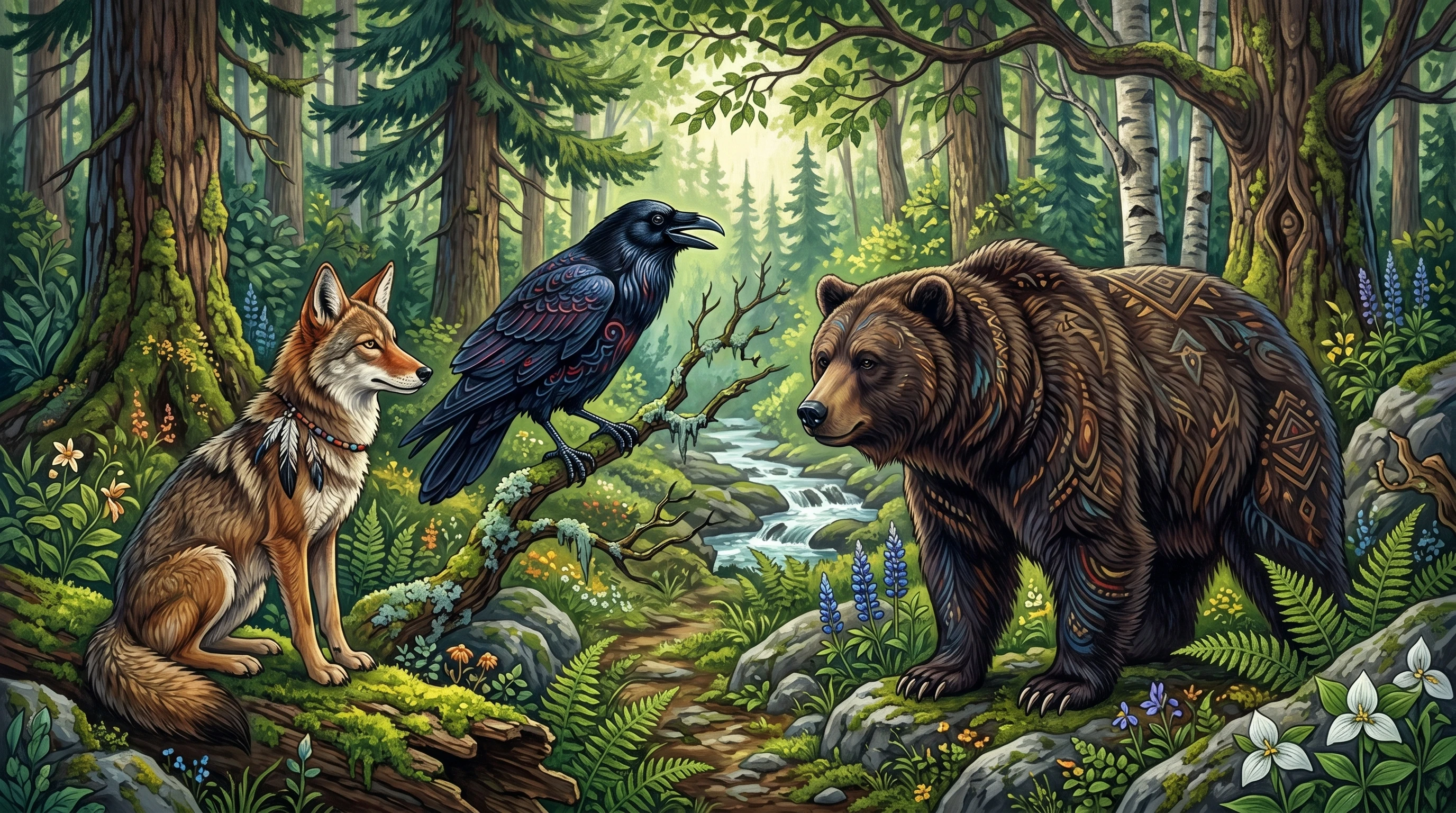
- Coyote: In the myths of many peoples across western North America, coyote is the trickster. He’s clever, sometimes silly, and often gets into trouble. Even when he messes up, coyote teaches lessons about pride, resourcefulness, and why people should respect the rules.
- Raven: In Pacific Northwest and Alaska Native myths, raven is a big deal. He brings light to the world, reshapes the land, and often outsmarts rivals. Raven’s stories usually show that intelligence, curiosity, and even mischief are valuable traits.
- Bear: For many Native groups, the bear stands for strength, healing, and protection. Bear spirits are often called on in ceremonies. Some myths say bears are ancestors, while others tell how bears brought knowledge of healing plants to people.
- Wolf: Wolf is celebrated for loyalty and teamwork. In some Plains and Woodland cultures, wolf packs model how families and communities should work together and care for one another.
- Turtle: Turtle features strongly in many creation stories, especially in Eastern Woodlands cultures. There are legends that describe the world resting on the back of a giant turtle, which gives us “Turtle Island”, a term still used by many to describe North America.
Other animal figures like eagle, fox, and rabbit also make frequent appearances. For example, eagle is seen as a messenger between the physical and spiritual worlds, while rabbit often brings humor and important moral lessons to the stories.
What Animals Teach in Native Folklore
The stories about these animal characters aren’t just for fun. Each one teaches something different. Here’s what I’ve learned from reading and listening to Native legends and folktales:
- Respect for Nature: Many stories show that animals and natural places deserve respect, not exploitation. This idea supports the Indigenous approach to stewardship and sustainability.
- Understanding Balance: Myths involving animals often talk about balance, whether it’s between people and nature, between different creatures, or inside each person. Overhunting, greed, or arrogance leads to trouble. Harmony brings good things for everyone.
- Learning by Example: By telling stories where animals solve problems, Native storytellers encourage kids and adults to notice the world around them, stay humble, and look out for their community.
- Passing Down Traditions: Animals are often at the center of important ceremonies, making stories a way for elders to teach new generations without always needing to explain everything outright.
These stories are filled with practical advice, too. For example, learning from beaver stories might help with teaching about resourcefulness and teamwork. Stories about birds and migration could give people ideas about change and adaptability in tough times.
Dealing with Modern Challenges
It’s true that as times have changed, Native animal myths sometimes get misrepresented or even lost. Urbanization and the influence of outside cultures can make it harder to keep these stories alive. But I’ve discovered that many Native groups are working hard to keep their stories and animal teachings going strong.
Programs focused on traditional languages, storytelling, and art classes are bringing myths about animals to kids in schools and community centers. It’s not just about entertainment or nostalgia; it’s about maintaining important knowledge, values, and a sense of belonging. Elders often play a big role, sharing the meanings behind animal characters and teaching youth to respect traditions.
There’s also a growing interest among non-Native people in animal myths. I think it’s important to approach these stories with respect, curiosity, and an open mind. Learning about Native mythology, including animal stories, can open up fresh perspectives about the environment and our place within it.
In some places, animal symbols are starting to be used in environmental education programs to help everyone think differently about conservation and sustainability. By recognizing the lessons in these myths, people can learn ways to live more responsibly and care for the natural world.
Common Questions About Animals in Native Mythology
If you’re new to Native myths and animal stories, you’re probably full of questions. Here are some that often come up and what I’ve found to be helpful answers:
Question: Are the same animals important to all Native peoples?
Answer: Different regions and cultures have their own animal figures, depending mostly on which animals live nearby and what local beliefs are. For example, salmon are really important to Northwest Coast peoples but don’t usually show up in Plains stories.
Question: What’s a trickster animal?
Answer: A trickster animal is one who bends or breaks the rules—sometimes for good, sometimes just for fun. Coyote, raven, and rabbit are some of the best-known tricksters. These stories explain big mysteries, like how fire was stolen or why different animals act as they do.
Question: What’s the meaning of animal totems and clans?
Answer: In some cultures, people belong to clans that trace their heritage to an animal ancestor. These clans often help organize society and show how people should relate to each other, their surroundings, and the spirit world.
Question: Can these stories be told by anyone?
Answer: Some animal stories are sacred or only shared in particular settings. Others are open to anyone who wants to listen and learn. If you’re curious, look for books, museum exhibits, or local cultural events, and always show respect to the community the stories come from.
Examples of Animal Stories and Their Meanings
- The Origin of Night and Day (Raven, Tlingit/Haida): This story tells how raven brought light into the world by outsmarting a chief. It’s not just an adventure. It’s about thinking creatively and being persistent.
- Bear and the Medicines (Plains Tribes): Bears, known for their healing skills, are credited with teaching people about roots and plants that cure sickness. This story reminds listeners that wisdom about healing comes from close observation of wildlife.
- Coyote and the Stars (Southwestern Tribes): In some versions, coyote tries to arrange the stars in neat patterns but ends up scattering them everywhere. This teaches about the unpredictability of life and how mistakes can lead to surprises, or even new beauty.
- Rabbit and the Sun (Mesoamerican Tribes, like the Aztec): Stories often show how rabbit traveled with the sun, hopping across the sky and helping light reach the earth. These tales encourage people to be brave and help others, even when the odds seem against them.
Bringing it All Together
Animals in Native mythology do a lot more than fill up storybooks or decorate art. They shape how people see themselves and their place in the world. Learning about these stories helps me appreciate Indigenous culture, encourages respect for nature, and offers practical wisdom about balance, respect, and community. Whether you’re curious about why coyote always seems to be in trouble or how turtles became part of a creation story, these myths have a lot to offer anyone willing to listen and learn. By listening to these stories and passing them on, we keep cultural connections strong and step up our understanding of the natural world.